1
Parcel Management System Overhaul
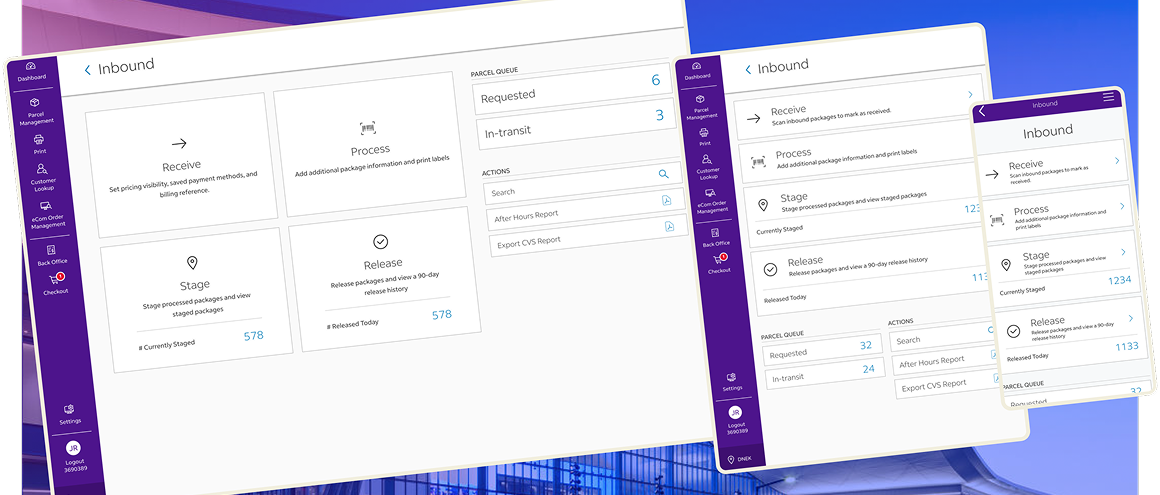
Led system-wide updates to FedEx’s parcel tracking platform, improving navigation, workflows, and operational consistency across the app.
Role: Principal UX & Product Designer
Timeline: 18 months
Challenge
Led a multi-phase UX redesign of FedEx’s Parcel Management platform, a high-volume, multi-role system supporting fee-sensitive operations.
Improved navigation, workflows, and operational consistency across the platform.
Impact
The redesign addressed over $5M in annual revenue leakage caused by manual processes and inconsistent workflows.
It also streamlined end-to-end system updates, improving operational efficiency and consistency across the platform.
May 2024 > Dec 2025

Parcel Management Platform
Parcel Management redesign
Client
FedEx / Parcel Management
Agency
Amdocs Studios
My Role
Senior User Experience Design Lead
Timeline
15 months
Responsibilities
Design Leadership
UX & Interaction Design
User Flows
Service Mapping
Journey Mapping
Wireframing
Rapid Prototyping
Enterprise UI Design
Workshop Facilitation
Overview
FedEx’s Parcel Management platform supports high-volume parcel auditing and reconciliation across 100+ locations.
Over time, the system struggled to keep pace with operational scale, accuracy requirements, and evolving workflows.
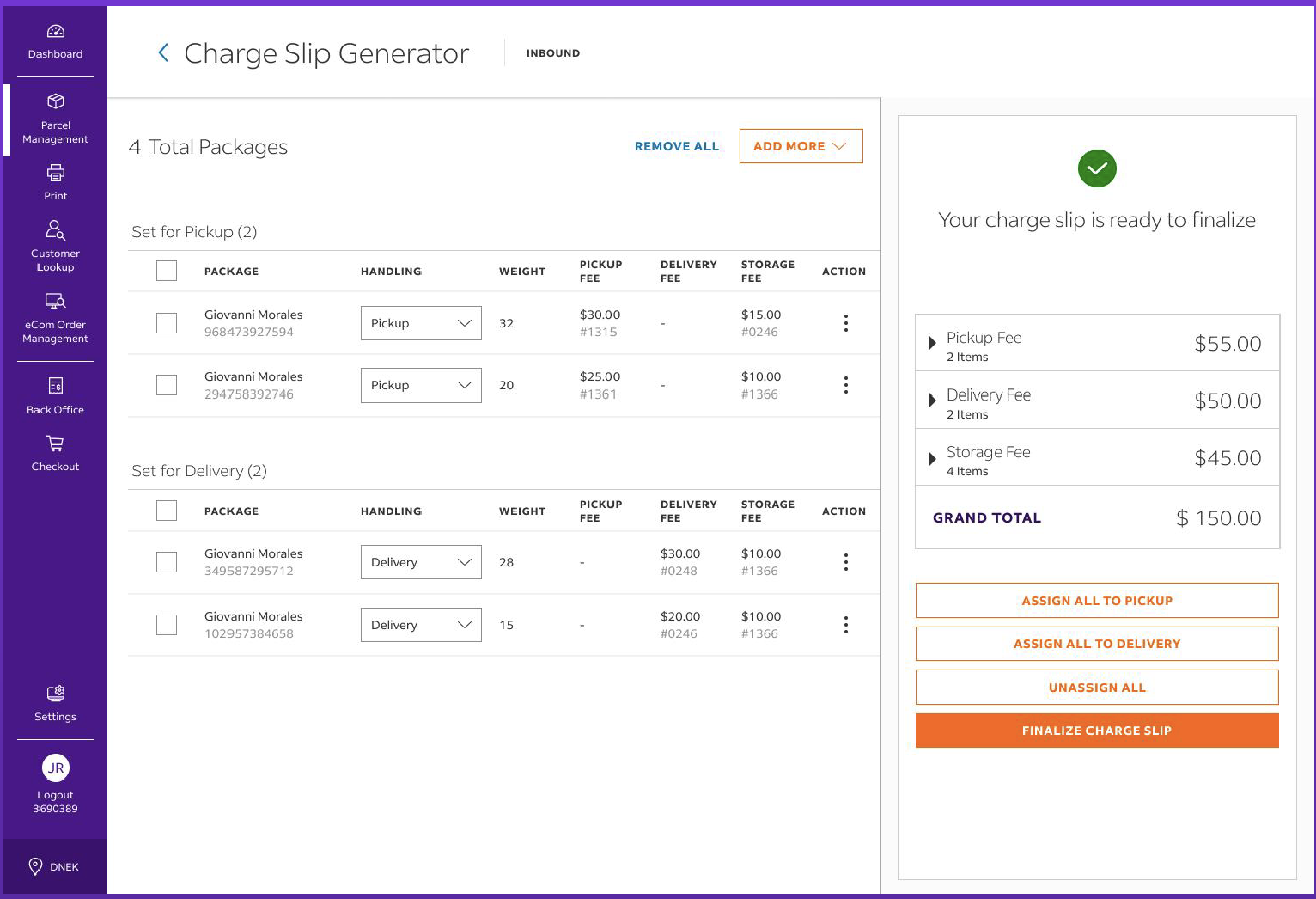
I led a multi-phase UX overhaul focused on simplifying complex processes, reducing manual effort, and restoring confidence in fee-sensitive tasks—anchored by a redesigned Charge Slip Generator that became central to parcel accuracy and revenue recovery.
The Parcel System at a Glance
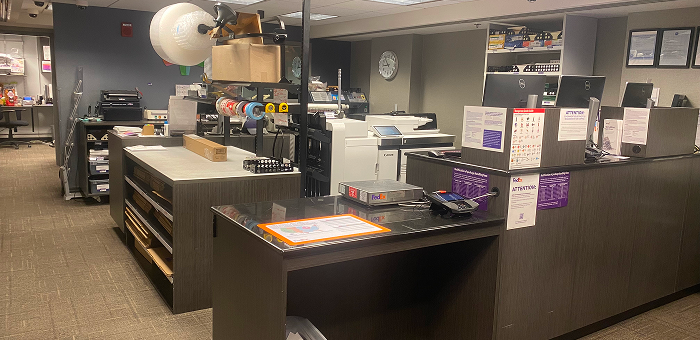
These locations function like on-site warehouses, coordinating high volumes of shipments across multiple carriers—often under intense time pressure during major events.
Where Parcel Operations Happen
Parcel operations span environments ranging from small hotels and corporate campuses to large-scale convention and event centers.
In the busiest locations, more than 1,000 packages can move through the system in a single day.
Hotel / Convention
116
Locations
Corporate Campuses
26
Locations
Below is a small snapshot of the range of parcel operating locations nationwide

Vegas
Venetian
- 17 Employess
- 1 Lead Consultant
- 2 Store Consultants
- 1 Sr. Store Manager
- 2 Asst. Store Managers
- Avg: 150+ per day
- Peak: 1000+ per day

Orlando
Caribe Royale Resort
- 6 Employess
- 3 Parcel Focused
- 1 Biz Center Backup
- 1 Biz Center TMs
- ---
- Avg: 100+ per day
- Peak: 750+ per day

Chicago
Marriot Downtown
- 3 Employess
- 1 Asst. Store Manager
- Team Floats as Needed
- ---
- ---
- Avg: 50+ per day
- Peak: 500+ per day

Washington DC
Marriott Marquis
- 3 Team Members
- 2 Asst. Store Managers
- Team Floats as Needed
- ---
- ---
- Avg: 40+ per day
- Peak: 500+ per day
System Scale & Volume
These volumes magnify the cost of manual steps and inconsistent workflows.
Annual Parcel
Fee Revenue
$32M
Annual
Annual Package
Volume
2.1M
Parcels
Year-over-Year
Growth
9%
Increase
The Problem & Goals
As parcel volume grew, teams relied on manual fee handling and disconnected tools to keep work moving. That made accuracy, auditability, and consistency difficult to maintain at scale.
In high-pressure, fee-sensitive moments, small errors compounded quickly—introducing real operational risk and revenue loss.
Business Impact Context
$5.1M
Estimated revenue leakage due to manual fee handling and inconsistent workflows
The goal wasn’t to add features—it was to reduce risk and cognitive load where it mattered most.
Goal 1
Simplify high-risk workflows and reduce manual calculation at points of revenue capture
Goal 2
Restore user confidence through clear feedback, status visibility, and traceability
Goal 3
Establish consistent
interaction patterns that scale across roles and locations
My Role & Scope
I led UX design for FedEx’s Parcel Management platform, shaping system behavior and core workflows while working closely with product, engineering, and operations to reduce risk and support scale across multiple releases.
System Vision
- Defined interaction principles across roles and features
- Established consistency for scalable system growth
Workflow Design
- Designed end-to-end parcel and charge workflows
- Optimized for speed, accuracy, and repeatability
Team Alignment
- Partnered across product, engineering, and operations
- Aligned teams through clear design direction
Execution & Delivery
- Translated strategy into delivery-ready designs
- Supported phased releases and iteration
Key Challenges
Updating a revenue-critical system required balancing speed, accuracy, and consistency—without disrupting daily operations.
1. Legacy workflows optimized for edge cases, not scale
2. Manual calculations introduced risk at points of revenue capture
3. Inconsistent patterns across roles increased training and errors
4. High-volume environments left little room for trial-and-error
5. Changes needed to roll out incrementally across locations
Design Strategy
Rather than redesign individual screens in isolation, the strategy focused on clarifying system behavior, reducing risk in critical moments, and establishing patterns that could scale across roles, locations, and future features.
Design for High-Risk Moments
Focused first on fee capture, status changes, and handoffs—where errors carry real risk.
System Patterns Over One-Off Solutions
Established consistent patterns so features felt predictable and reusable at scale.
Reduce Cognitive Load First
Reduced decisions through defaults, automation, and clearer system guidance.
Ship in Phases, Learn Fast
Shipped incrementally to gather feedback without disrupting live operations.
Charge Slip Generator
The Charge Slip Generator addressed the most critical breakdown in the system: manual fee calculation at scale. It transformed a high-risk, error-prone task into a guided, auditable workflow designed for speed and confidence.
Guided Fee Calculation
Automated rules and defaults reduced manual math and prevented common errors.
Clear Line-Item Transparency
Users could see exactly how charges were calculated—building trust and auditability.
Built-In Validation & Feedback
Errors were caught early, with clear prompts and next steps.
Audit-Ready by Design
Every charge was traceable, supporting reconciliation and reporting needs.
Supporting Capabilities
Alongside Charge Slip, several supporting capabilities were redesigned to reinforce consistency, visibility, and operational flow across the platform.
Dashboard & Status Views
Clear summaries of parcel state, fees, and exceptions.
Parcel Queue Management
Improved scanning, sorting, and handoff during peak volume.
Activity Log & Timeline
A shared source of truth for parcel history and actions.
Quick Quote & Fee Preview
Early visibility into charges before commitment.
OUTCOME
The redesigned Parcel Management platform reduced risk in fee-sensitive workflows, improved clarity at scale, and established a foundation for future updates—all while supporting live operations across 100+ locations.
Reduced friction in high-volume parcel handling
Improved consistency and accuracy in fee collection
Increased trust through clearer system feedback and traceability
Established design patterns adopted in future platform work
Reflection
Being involved from early discovery through delivery allowed me to shape the system with consistency and care—resulting in changes teams could act on immediately in real operational settings.
Designing for high-volume, fee-sensitive workflows reinforced the importance of clarity, restraint, and trust—especially when small decisions have outsized impact at scale.
*This case study captures the high-level approach and impact.I’m happy to walk through deeper details—artifacts, trade-offs, and decisions—during a live conversation.